CONNECTED ASSETS & PREDICTIVE FIELD TELEMETRY
Connecting Industrial IoT with Microsoft Dynamics 365 Operations
Transform raw machine telemetry into autonomous work orders, predictive equipment maintenance, and real-time shop-floor operational intelligence.
- Azure IoT Hub Telemetry
- Predictive Equipment Maintenance
- Connected Field Service Dispatch
- Shop-Floor Edge Intelligence
- Real-Time Asset Digital Twins

STRATEGIC PERSPECTIVE
The Connected Operations Mandate: Moving from Reactive Repair to Autonomous Service
Strategic Imperative: Industrial enterprises lose billions annually to unexpected machine breakdowns, reactive truck rolls, and lagging factory maintenance communications.
In manufacturing plants, energy facilities, and distributed commercial asset fleets, equipment failure has historically triggered a slow, costly sequence of events: a machine breaks down, an on-site operator manually reports the issue, a service coordinator dispatches a technician who arrives without the right replacement parts, and production remains idle for days.
The convergence of Internet of Things (IoT) sensors, edge computing, and Microsoft Dynamics 365 breaks this reactive cycle. By connecting smart sensors via Azure IoT Hub directly into Dynamics 365 Field Service and Supply Chain Management, equipment anomalies automatically trigger diagnostic self-healing routines, reserve replacement parts, and dispatch qualified technicians before the machine ever fails.
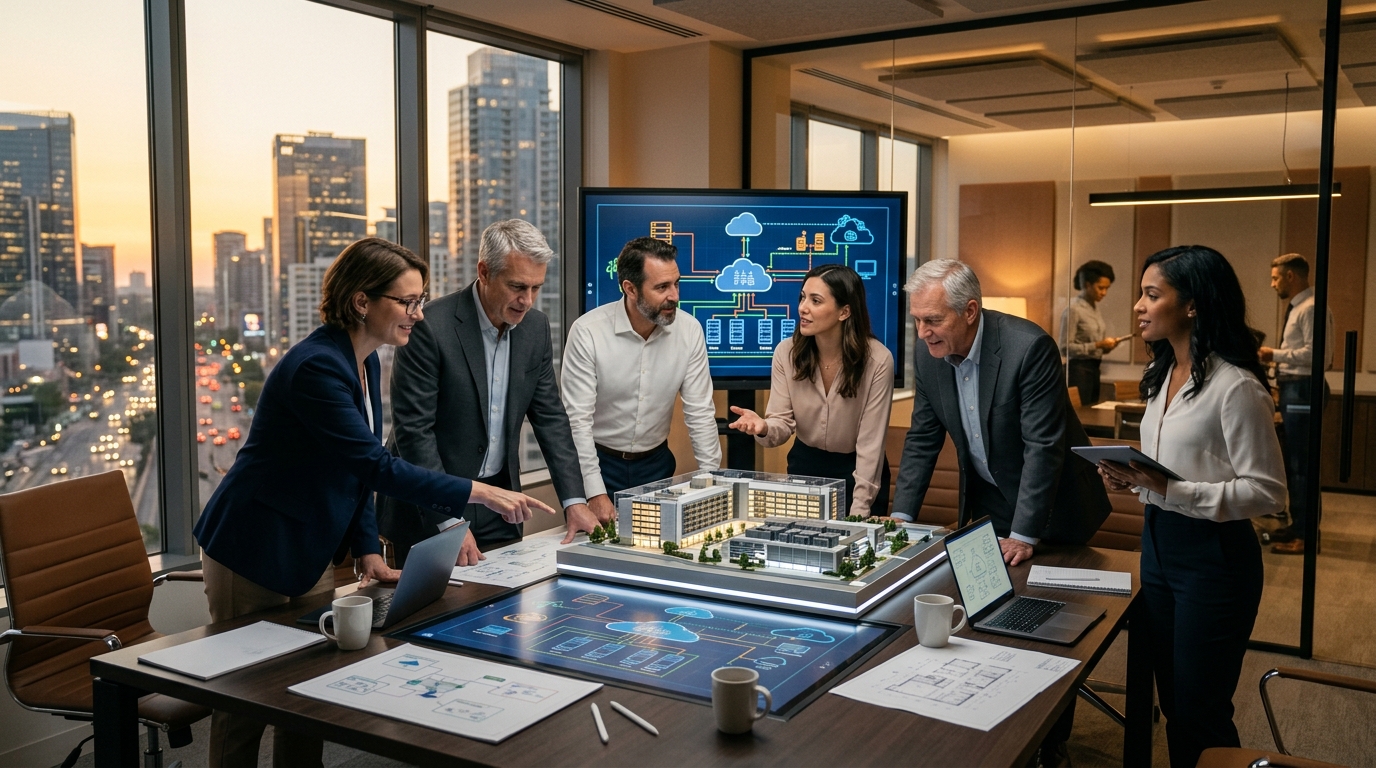
Routeget Connected Operations Practice bridges industrial operational technology (OT) with enterprise information technology (IT). We architect scalable IoT sensor telemetry pipelines, build predictive machine learning maintenance models, and automate end-to-end work order dispatch to eliminate unplanned downtime.
CORE ARCHITECTURAL PILLARS
Connected IoT & Enterprise Operations Capabilities
Four foundational capability pillars connecting physical industrial assets with cloud business applications.
Telemetry Ingestion
Azure IoT Hub & Edge Telemetry Pipeline Architecture
Ingesting high-frequency sensor telemetry from industrial machinery, fleets, and remote assets securely.
Pillar 01 Scope & Governance
Connected Service
Connected Field Service & Autonomous Work Order Dispatch
Translating IoT anomaly signals into automated diagnostics and intelligent field technician scheduling.
Pillar 02 Scope & Governance
Predictive Health
Predictive Asset Maintenance & RUL Modeling
Predicting Remaining Useful Life (RUL) and scheduling maintenance during planned production downtime.
Pillar 03 Scope & Governance
Shop Floor Digital Twin
Azure Digital Twins & Factory Floor Intelligence
Building real-time spatial digital twin models of production lines and physical distribution centers.
Pillar 04 Scope & Governance
TECHNICAL SPECIFICATIONS & SLA COMMITMENTS
Detailed Architecture Specifications & Delivery Governance
Comprehensive functional requirements, implementation guardrails, and enterprise SLA obligations across all operating pillars.
Azure IoT Hub & Edge Telemetry Pipeline Architecture — Detailed Specifications
- Scalable Sensor Telemetry Ingestion: Azure IoT Hub streaming millions of temperature, vibration, and pressure data points.
- Azure IoT Edge Intelligence: Deploying local machine learning models for sub-second anomaly detection at the edge.
- Industrial Protocol Connectors: Bridging legacy OPC-UA, Modbus, MQTT, and BACnet factory protocols to Azure cloud.
- End-to-End Asset Security: Hardware root-of-trust security, certificate authentication, and encrypted data in transit.
Connected Field Service & Autonomous Work Order Dispatch — Detailed Specifications
- Automated IoT Alert Triage: Filtering transient sensor anomalies and triggering formal alerts only on validated issues.
- Autonomous Work Order Generation: Automatically creating detailed work orders with pre-diagnosed error codes.
- Right-Part Right-Skill Dispatch: Universal Resource Scheduling matching certified technicians and reserving replacement inventory.
- Remote Device Self-Healing: Sending automated reset and recalibration commands back to devices without technician travel.
Predictive Asset Maintenance & RUL Modeling — Detailed Specifications
- Remaining Useful Life (RUL) Machine Learning: Training predictive algorithms on historical component degradation data.
- Condition-Based Maintenance: Replacing rigid calendar-based servicing with dynamic usage-based maintenance cycles.
- Asset Health Scoring Telemetry: Real-time visual health scores displayed directly on Dynamics 365 asset record cards.
- Warranty & Service Contract Linkage: Validating customer SLA entitlements before dispatching technicians.
Azure Digital Twins & Factory Floor Intelligence — Detailed Specifications
- Spatial Digital Twin Modeling: Interactive 3D visualization of manufacturing facilities mapped to live sensor streams.
- Overall Equipment Effectiveness (OEE): Real-time calculation of asset availability, performance, and quality metrics.
- Energy Consumption Optimization: Identifying energy-intensive machines and optimizing power usage during peak tariffs.
- Executive Telemetry Dashboards: Native Power BI reports tracking fleet-wide reliability, MTBF, and first-time fix rates.
DELIVERY METHODOLOGY
Routeget XDRI™ Connected IoT Deployment Framework
Our structured 4-phase rollout methodology ensuring verifiable ROI and scalable OT/IT integration.
Phase 01: OT/IT Architecture & Asset Discovery
Cataloging industrial machine protocols, sensor feasibility, and defining critical failure mode telemetry thresholds.
Phase 02: Azure IoT Pipeline & Alert Configuration
Provisioning Azure IoT Hub, configuring stream analytics rules, and connecting Connected Field Service endpoints.
Phase 03: Pilot Asset Instrumentation & Testing
Instrumenting 10 to 20 critical machines, validating automated work order generation, and training service dispatchers.
Phase 04: Fleet-Wide Rollout & Autonomous Operations
Scaling sensor ingestion across all manufacturing facilities and activating predictive machine learning maintenance.
QUANTIFIABLE IMPACT
Measurable Business Outcomes & Performance Metrics
Quantifiable operational enhancements achieved through disciplined architecture, automated governance, and cloud optimization.
Reduction in manual processing workflows across business units
Enterprise cloud reliability backed by multi-region redundancy
Accelerated turnaround through unified real-time data models
End-to-end immutability across regulatory and financial records
EXECUTIVE FAQ
Frequently Asked Questions: Dynamics 365 & IoT Integration
Key technical answers for operations and technology leaders evaluating connected industrial IoT architectures.
How does Connected Field Service prevent dispatchers from being overwhelmed by thousands of sensor pings?
Can Dynamics 365 send commands back to remote IoT devices to fix problems automatically?
How does the system integrate with legacy factory machines that do not have built-in internet connectivity?
What security measures protect our industrial operational technology (OT) from external cyber threats?
ENTERPRISE TRANSFORMATION
Transform Industrial Operations into an Autonomous Service Engine
Schedule an executive IoT and Connected Field Service discovery session with Routeget’s certified architects.
