SPATIAL COMPUTING & INDUSTRIAL METAVERSE
Pioneering Enterprise Spatial Computing, Augmented Reality, and Industrial Twins
Accelerate technician training, empower frontline field workers with hands-free AR remote assistance, visualize complex architectural models, and deploy interactive 3D digital twins with Routeget.
- Enterprise Spatial Computing
- Industrial Augmented Reality (AR)
- Immersive VR Workforce Training
- Dynamics 365 Remote Assist
- Interactive 3D Digital Twins
STRATEGIC PERSPECTIVE
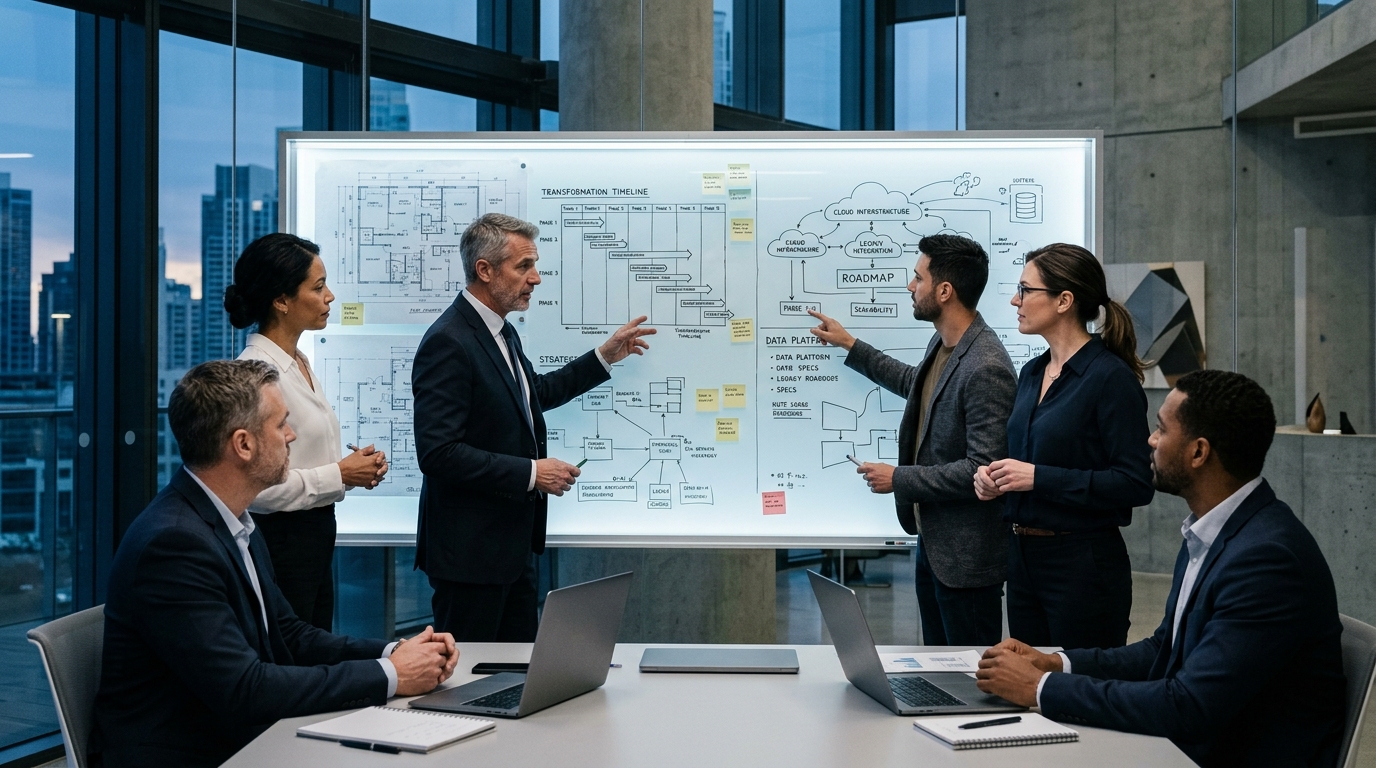
The Spatial Computing Mandate: Merging the Physical and Digital Worlds
Strategic Imperative: Enterprise computing is breaking free from 2D flat screens. Spatial computing projects contextual digital information, holographic schematics, and interactive simulations directly into the physical workspace.
In capital-intensive industries—such as aerospace manufacturing, commercial construction, complex medical surgery, power generation, and field service maintenance—frontline workers have historically been constrained by static paper manuals, 2D blueprints, and disconnected laptop computers. Attempting to consult complex technical manuals while operating heavy machinery or diagnosing field equipment creates severe safety risks, costly assembly errors, and prolonged maintenance downtime.
Routeget’s Enterprise Spatial Computing & Augmented Reality Practice delivers cutting-edge immersive solutions that bridge the physical and virtual enterprise. Leveraging Microsoft HoloLens 2, Apple Vision Pro, Meta Quest, and enterprise spatial frameworks, our certified engineers build immersive applications that project real-time IoT telemetry, step-by-step 3D holographic work instructions, and remote expert guidance directly onto physical equipment.
We integrate spatial computing seamlessly with Microsoft Dynamics 365 Field Service, Dynamics 365 Guides, and Azure Digital Twins. We reduce onboarding time for technical technicians by up to 60%, eliminate expensive field technician travel through real-time ‘see-what-I-see’ remote assistance, and empower global engineering teams to collaborate around photorealistic 3D holographic prototypes.
CORE ARCHITECTURAL PILLARS
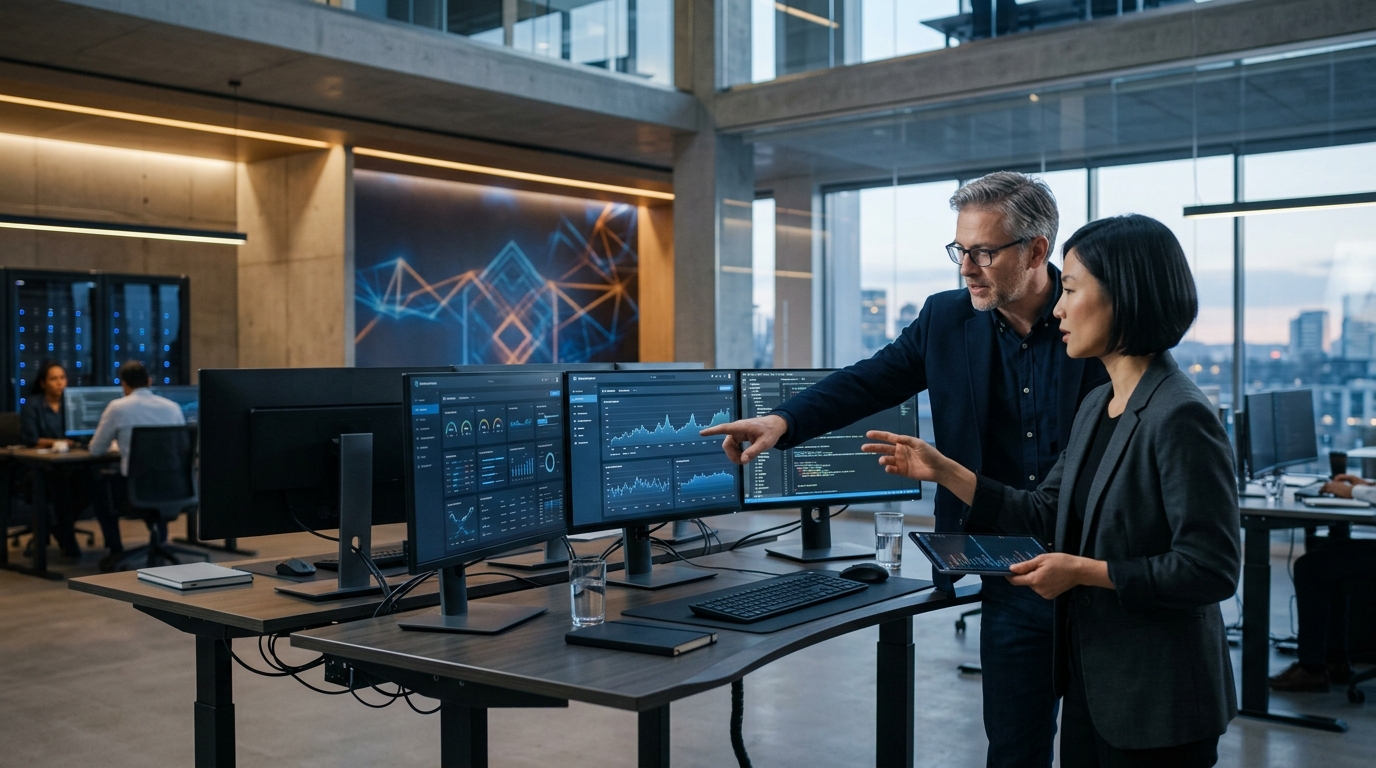
Comprehensive Spatial Computing Solutions & Capabilities
The four foundational functional pillars of Routeget’s enterprise AR, VR, and industrial digital twin practice.
Frontline AR
Industrial Augmented Reality & Hands-Free Work Instructions
Empowering factory workers and field technicians with heads-up, hands-free holographic guidance on physical machinery.
Pillar 01 Scope & Governance
Remote Assistance
Remote Expert Collaboration & See-What-I-See AR
Connecting on-site field technicians with global senior engineering specialists in real-time.
Pillar 02 Scope & Governance
Immersive VR Training
Immersive VR Workforce Training & Hazard Simulations
Training personnel in photorealistic virtual environments on hazardous, high-cost, or rare operational scenarios safely.
Pillar 03 Scope & Governance
3D Digital Twins
Interactive 3D Digital Twins & BIM Spatial Models
Transforming complex CAD/BIM architectural models into interactive, collaborative 3D digital twins.
Pillar 04 Scope & Governance
TECHNICAL SPECIFICATIONS & SLA COMMITMENTS
Detailed Architecture Specifications & Delivery Governance
Comprehensive functional requirements, implementation guardrails, and enterprise SLA obligations across all operating pillars.
Industrial Augmented Reality & Hands-Free Work Instructions — Detailed Specifications
- Dynamics 365 Guides Integration: Step-by-step 3D holographic work instructions anchored precisely to physical machine parts.
- Error-Proof Assembly Verification: Spatial computer vision algorithms verifying each bolt and cable is installed correctly before advancing.
- Hands-Free Voice Navigation: Controlling documentation, schematics, and video capture using intuitive voice commands in noisy factories.
- Live IoT Telemetry Projection: Holographic heads-up gauges displaying real-time machine temperature and pressure over physical assets.
Remote Expert Collaboration & See-What-I-See AR — Detailed Specifications
- Dynamics 365 Remote Assist: Sharing live video feeds from smart glasses, allowing remote experts to draw spatial 3D ink on equipment.
- Multi-Party Video Collaboration: Remote engineering teams co-inspecting equipment anomalies from anywhere in the world simultaneously.
- Low-Bandwidth Satellite Optimization: Resilient video streaming protocols operating reliably over low-speed satellite connections in remote fields.
- Automated Field Service Logging: Recording remote assistance sessions, snapshots, and audio logs directly into Dynamics 365 work orders.
Immersive VR Workforce Training & Hazard Simulations — Detailed Specifications
- Zero-Risk Hazard Simulation: Simulating chemical spills, electrical arc blasts, and emergency turbine shutdowns in immersive VR.
- Muscle Memory Replication: Haptic sensory gloves and precise hand tracking simulating physical wrench torque and valve operation.
- Accelerated Technician Onboarding: Reducing complex industrial equipment training cycles from six months to two weeks.
- Automated Performance Scoring: Real-time telemetry tracking trainee gaze direction, reaction latency, and procedural mistakes.
Interactive 3D Digital Twins & BIM Spatial Models — Detailed Specifications
- Azure Digital Twins Integration: Connecting 3D spatial models directly with real-time IoT sensors and environmental telemetry.
- BIM Model Spatial Overlay: Superimposing architectural CAD models over physical construction sites to detect pipe routing clashes.
- Collaborative Multi-User Design Reviews: Dispersed design teams collaborating as photorealistic avatars around virtual vehicle prototypes.
- Simulated Facility Throughput: Visualizing factory AGV routes, material handling flows, and worker ergonomics in real-time 3D.
DELIVERY METHODOLOGY
The Routeget Spatial Computing Delivery Progression
Our structured 4-step framework for discovering, engineering, testing, and deploying enterprise AR/VR platforms.
Phase 01
eXplore & Audit
Forensic evaluation of legacy systems, integration dependencies, security posture, and workflow bottlenecks.
Deliverable: Comprehensive Technical Debt Audit & Modernization Charter
Phase 02
Design & Architect
Formulation of target-state cloud architecture, unified data schemas, and governance controls.
Deliverable: Target Architecture Blueprint & Migration Roadmap
Phase 03
Realize & Implement
Agile, sprint-driven implementation featuring automated CI/CD pipelines, zero-downtime cutovers, and UAT.
Deliverable: Validated Production Deployment & Cutover Sign-Off
Phase 04
Impact & Optimize
Hypercare transition, automated telemetry monitoring, proactive tuning, and SLA-governed support.
Deliverable: Continuous SLA Governance & Value Realization Scorecard
QUANTIFIABLE IMPACT
Measurable Business Outcomes & Performance Metrics
Quantifiable operational enhancements achieved through disciplined architecture, automated governance, and cloud optimization.
Reduction in manual processing workflows across business units
Enterprise cloud reliability backed by multi-region redundancy
Accelerated turnaround through unified real-time data models
End-to-end immutability across regulatory and financial records
EXECUTIVE FAQ
Strategic Clarity & Enterprise Architecture FAQ
Critical architectural, operational, and licensing considerations for executive leadership and steering committees.
What is the difference between Augmented Reality (AR) and Virtual Reality (VR) in enterprise contexts?
How does Routeget optimize massive CAD/BIM engineering models for lightweight headsets?
Can AR headsets be safely worn in hazardous industrial environments?
How does Dynamics 365 Remote Assist reduce field service operational costs?
ENTERPRISE TRANSFORMATION
Transform Your Operations with Enterprise Spatial Computing
Schedule an Immersive Technology Scoping Session with Routeget’s Spatial Computing Practice Directors to experience live AR demonstrations.