

Whenever you see a successful business, it’s because someone once made a courageous decision. When life is full of choices like Apple vs. Samsung, Facebook vs. Instagram, and Star Wars vs. Star Trek, it can be hard to choose just one. In the corporate world, the Dynamics CRM vs. Salesforce decision has long been a tough decision to make.
So how do you decide which software is better for your sales team? For customer service? For you, to understand actuals and forecast for the future? And for business growth?
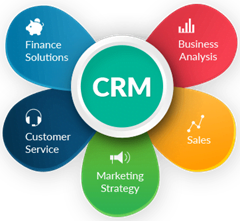

Having a good CRM system is fundamental for competitive excellence. CRM systems enable you to interact with and understand your customers’ preferences better and offer exceptional service. Microsoft’s Dynamics CRM and Salesforce are two of the most popular (and capable) products in the market, but both solutions are like peas in a pod. Although there are a handful of other products available in the market, Dynamics CRM and Salesforce end up being pitted against each other due to the features they possess, the markets they target, and the user experience they provide.
In that case, how do you choose one over the other?
First, it is very important to note the differences in the names of the product tiers. Nobody wants to find out that they have to pay a lot of extras in order to get advertised benefits. Microsoft’s top tier is called “Enterprise,” and the most common fully-functional CRM license level is “Professional.” Salesforce calls its popular but not top tier, “Enterprise,” giving it a bit of grade inflation. Salesforce’s “Professional” solution is quite under-powered for serious CRM users. In order to make a sort of apples-to-apples comparison, we’re comparing Microsoft Professional Dynamics 365 CRM Online with Salesforce Lightning Enterprise, without all the extras that Salesforce often requires to make it appear more complete.
Enterprise Architecture & ERP Implementation Governance
Transitioning complex organizational workflows into scalable ERP modernization architectures requires systematic alignment between core operational processes and underlying digital infrastructure across all operating subsidiaries. When executing enterprise deployments within intricate multi-entity business environments, organizations must rigorously prioritize data normalization, chart-of-accounts standardization, and unified telemetry architectures. Establishing resilient, pre-configured integration boundaries across legacy application estates directly eliminates technical debt while ensuring end-to-end data integrity across high-frequency transactional lifecycles. Cross-functional governance committees—uniting financial controllers, supply chain leaders, and enterprise technical architects—remain indispensable for maintaining strict configuration discipline and curbing procedural fragmentation across regional operating units.
Beyond core transactional execution, enduring platform longevity depends on deliberate organizational enablement and continuous operational validation across all stakeholder tiers. Implementing isolated sandbox environments, automated regression testing frameworks, and formalized release cadence protocols enables business units to absorb continuous platform enhancements without introducing unexpected downtime or operational friction. Enterprises that deliberately pair proactive telemetry monitoring with targeted role-based training programs consistently achieve accelerated user adoption, compress post-go-live stabilization horizons, and maximize the long-term return on strategic technology investments. This disciplined operating model provides the institutional agility needed to scale operations predictably.




No comment yet, add your voice below!