

Here at Routeget Technologies, we spend a lot of time looking at data and anticipating what will happen next. When it comes to the future of business, we get some of our best ideas by looking at new information technologies and thinking about their effects. Cloud computing is increasingly an integral part of most organizations’ technology stacks.
But the cloud is much more than a new generation of machines and software. We’re already seeing that transformation happen to the billions of users and millions of companies that rely on our technology.

What makes us think that cloud computing will change things beyond IT itself? History argues for it. Mainframe computers made operations research possible. The PC revolution made anyone a potential entrepreneur. Client-server enabled corporate reengineering, and smartphones created the app economy and computing from almost anywhere.
The cloud, we believe, draws on more diverse data sources, breaks down more silos, utilizes faster network speeds, and enables more powerful analyses, all at a lower cost than anything tech has seen before. It is not a technology that belongs to any one provider, or even a bunch of big tech companies. It is a new generation of computing, a new way of using resources, like mainframes, PCs, and servers were in their time.
It is a way of thinking about and doing computing that creates something new: a future with new kinds of product creation, new partnerships, and new ways of working. This doesn’t mean everything has to change – but organizations get more from their data, their competitive advantage, and their existing relationships.

As with any momentous change, business leaders must navigate the here and now – whether on-prem, hybrid, or multi-cloud – with an eye toward the future. Leading companies must strive for an even more elevated view as they embark on their business transformation journey, bringing with them the experience, history, and strengths of their established systems.
Our advances in areas like analytics and machine learning power data collection and productivity, and our security innovations protect billions of users’ data. It’s been 16 years now, but these changes are far from over. In fact, for many companies, they’re just beginning.
This is why we assembled this blog series – to help business and IT leaders navigate the changing business world with cloud computing. We gathered insights from users, conversations with businesses of all sizes, surveys, polls, and knowledge from within Routeget itself to offer you a holistic view of the current landscape and where it’s already going in terms of value, innovation, and competition.
The goal is to give you the insights you need to craft winning strategies by building on your existing environment and moving toward a future that unlocks the benefits of cloud computing. We hope that you can put these examples from real companies, current market trends, and learnings from Routeget’ executives to good use, and as always, we look forward to partnering with you on whatever comes next.
Practical Implications & Cloud Modernization Strategy
Migrating core commercial applications and legacy workloads into modern hyperscale cloud architectures requires a phased modernization strategy that balances execution speed with disciplined financial governance across the entire corporate portfolio. Enterprise architects must perform rigorous dependency mapping to determine optimal workload placement—evaluating managed containerized runtimes, cloud-native serverless functions, and dedicated software-as-a-service platforms against strict latency, security, and sovereignty requirements. Implementing automated infrastructure-as-code pipelines, standardized policy definitions, and centralized identity enforcement guarantees enterprise landing zones maintain robust architectural governance, predictable system performance, and strict regulatory adherence across dynamic production environments.
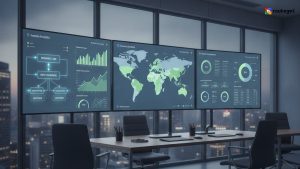
Long-term modernization success fundamentally hinges on mature cloud financial operations (FinOps) and continuous platform performance optimization across multidisciplinary engineering and finance teams. Establishing live telemetry dashboards, automated workload elasticity policies, and rigorous capacity planning mechanisms empowers infrastructure managers to eliminate redundant resource consumption while scaling compute dynamically to meet volatile commercial demand. Organizations that deliberately align cloud modernization milestones with measurable strategic business outcomes consistently accelerate digital release velocity, elevate operational reliability, and unlock superior stakeholder value from modern enterprise technology investments. This structured alignment provides the operational stability required for enduring digital maturity.


No comment yet, add your voice below!