

Every area of business has faced its own challenges over the past 15 months—from sales and marketing to customer support and product development. On top of all that, cyber threats have grown as criminals rushed to take advantage of remote working and the weaknesses it exposes in cyber resilience.
As we emerge from this crisis, it has become clear that things will not simply go back to the way they were before. Here are five leadership lessons from the pandemic from the Routeget Technologies leadership team.
Lesson 1: Communication is key
When supporting customers through a global pandemic, two-way communication and collaboration are vital. In those first few months, our customers were looking to Routeget Technologies for solutions as they quickly digitized processes and information and moved to remote work.
“The importance of honest, two-way communication with customers cannot be stressed enough. The move to virtual has meant a lot more time spent on Zoom or Teams, but we’re highly conscious of the quality of this communication, both inside our division and with our customers,” says Raj Bhalara, EVP, Business Operations. “Implementing regular communication protocols has enabled us to be proactive in supporting our customers and provide clear, open, and timely communication – and pivot as needed – as we collaborate on their digitization efforts.”
Lesson 2: Digital events are now the norm
Events, conferences and tradeshows changed forever with the global pandemic. But the shift to digital events meant thinking through the digital experience from the customer’s perspective.

“Attendees are looking for different experiences from virtual events than were on offer at in-person conferences,” says Haresh Sardhara, SVP, Production. “In the place of live sessions featuring panel discussions and PowerPoint presentations, we’re seeing much more interest in highly compelling product demonstrations and trials. We’ve created `click tours,’ which allow people to check out the look and feel of our products, with training embedded in the experience.”
Lesson 3: Process change, remote collaboration, and automation are key to innovation during a crisis
Product innovation during a crisis requires the ability to quickly adapt to your customers’ changing priorities and pivot internal processes to better deliver the technology your customers need most.
“In the past year, our ability to accelerate the product pipeline and deliver high-value-added product innovations as new customer priorities emerge has been critical to our success—and to the success of our customers,” says Alex Somuah, EVP and Chief Product Officer.
Lesson 4: Cyber resilience is about training and education as much as the tech
The explosion in remote work has meant an equal explosion in new endpoints connected to corporate networks. Coupled with the rise in cyber-attacks, organizations are faced with significant challenges in making their organizations cyber resilient.
“There is an increasing need for organizations to invest in a multi-layered approach to becoming cyber resilient,” says Daniel Fred, EVP SMB/Consumer Sales. “Technology solutions are necessary, but it’s only a piece of the puzzle. Training and education are equally critical. And by recognizing this, SMBs – in fact, all businesses – must take responsibility for both the security and education of their people.”
Lesson 5: Rethink traditional customer engagement and communication
Meeting customers face-to-face ceased to be a possibility in March 2020 and needed a rethink of the entire enterprise sales process.
“In terms of the sales cycle, we moved to invest substantially in the earlier parts of the buying process, with the aim to replace some of the normal face-to-face interactions with a digital equivalent,” says Simon “Ted” Harrison, EVP, Enterprise Sales. “By refocusing on how our customers and prospects want us to communicate with them, we have been able to supply relevant, timely, and targeted ideas on how Routeget Technologies can help them navigate the current work, social and economic challenges.”
Executive Takeaways & Long-Term Value Realization
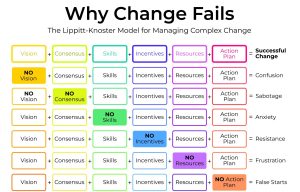
Orchestrating sustainable corporate transformation requires decisive executive leadership capable of harmonizing high-level strategic board mandates with practical operational execution across all core operating divisions. Major enterprise initiatives frequently encounter friction not from technological constraints, but from fragmented departmental communications, misaligned performance incentives, and unaddressed cultural resistance to procedural evolution across business units. By articulating transparent programmatic milestones, unified performance dashboards, and shared ownership structures across departmental boundaries, leadership teams build the organizational clarity necessary to navigate complex modernization initiatives decisively, predictably, and with minimal operational friction.
Achieving enduring commercial leadership in dynamic market environments necessitates treating organizational agility and human capital development as essential core corporate capabilities. Establishing open operational feedback loops, celebrating iterative program successes, and delivering tailored professional development tracks empowers enterprise teams to adapt to market disruptions proactively and confidently across every functional tier. Enterprises that champion methodical execution, continuous innovation, and cross-functional synergy consistently outperform industry peers in operational productivity, employee retention, and overall customer satisfaction across competitive global markets worldwide. This unified cultural discipline ensures organizational stability throughout broad technological modernization journeys. This structured alignment provides the operational stability required for enduring digital maturity.


No comment yet, add your voice below!