

The importance of information systems (IS) for companies has grown rapidly over the recent years. For example, companies from various industries are focusing their efforts to digitize business models, to adopt agile forms of collaboration, and to leverage automation of routine tasks. This forces companies to review their IS sourcing strategies and to potentially consider alternatives for current outsourcing contracts.
One potential option could be to backsource IS services currently performed by external vendors. Based on empirical observations, previous academics defined it as the repatriation of all assets, activities, and skills needed to perform IS services back in-house, which had been outsourced previously to one or multiple vendors. The distinctive characteristic of backsourcing is the change in ownership back to the mother organization. This distinguishes the term backsourcing from similar terms, e.g., backshoring, reshoring, or relocating, which rather focus on the change in location of the service delivery. At the initial sourcing decision, the strategy to outsource an IS service was considered most promising. However, certain developments both inside the company, but also on a broader industry level may lead to a re-evaluation of the situation and thus to an adjustment of the original sourcing strategy.

Over the last years, there has been a strong increase in cloud-based services and a shift towards the deployment of standardized, almost “industrialized” applications as services. Before, large companies leveraged their size in realizing economies of scale within their sourcing volumes. The raise of cloud computing as well as standardization of service delivery decreased those benefits and led towards a decline in large outsourcing contracts across a variety of services and a growth of multi-sourcing of individual IS services from the respective “best-in-breed” vendors for shorter time periods. Besides sourcing the best vendor for each service, companies that implement multi-sourcing strategies additionally aim for cost benefits due to an increased competition between vendors, and an increase in agility and adaptability.
At the same time, a move towards multi-sourcing strategies with shorter contract durations leads to an increase in so-called “second generation sourcing decisions”, namely whether to continue outsourcing a respective service or to bring the service back in-house. Given the developments within the IS environment, this research projects aims at understanding why IS services are backsourced and which factors influence a company’s decision to backsource an IS service.
Executive Takeaways & Long-Term Value Realization
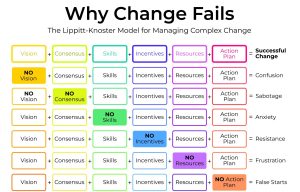
Orchestrating sustainable corporate transformation requires decisive executive leadership capable of harmonizing high-level strategic board mandates with practical operational execution across all core operating divisions. Major enterprise initiatives frequently encounter friction not from technological constraints, but from fragmented departmental communications, misaligned performance incentives, and unaddressed cultural resistance to procedural evolution across business units. By articulating transparent programmatic milestones, unified performance dashboards, and shared ownership structures across departmental boundaries, leadership teams build the organizational clarity necessary to navigate complex modernization initiatives decisively, predictably, and with minimal operational friction.
Achieving enduring commercial leadership in dynamic market environments necessitates treating organizational agility and human capital development as essential core corporate capabilities. Establishing open operational feedback loops, celebrating iterative program successes, and delivering tailored professional development tracks empowers enterprise teams to adapt to market disruptions proactively and confidently across every functional tier. Enterprises that champion methodical execution, continuous innovation, and cross-functional synergy consistently outperform industry peers in operational productivity, employee retention, and overall customer satisfaction across competitive global markets worldwide. This unified cultural discipline ensures organizational stability throughout broad technological modernization journeys. This structured alignment provides the operational stability required for enduring digital maturity.





No comment yet, add your voice below!