

Data without insight has little value. That’s why we have Data Warehouse professionals to turn those zeroes and ones into actionable insight that helps organizations make better decisions, earn new customers, identify new opportunities, and turn existing customers into ambassadors for their companies’ products, services, and brands.
But there is intense pressure to innovate faster than the competition. Coupled with the difficulty of finding and retaining properly-trained IT staff, initiating digital transformation takes a secondary role to putting out the fires and surviving.
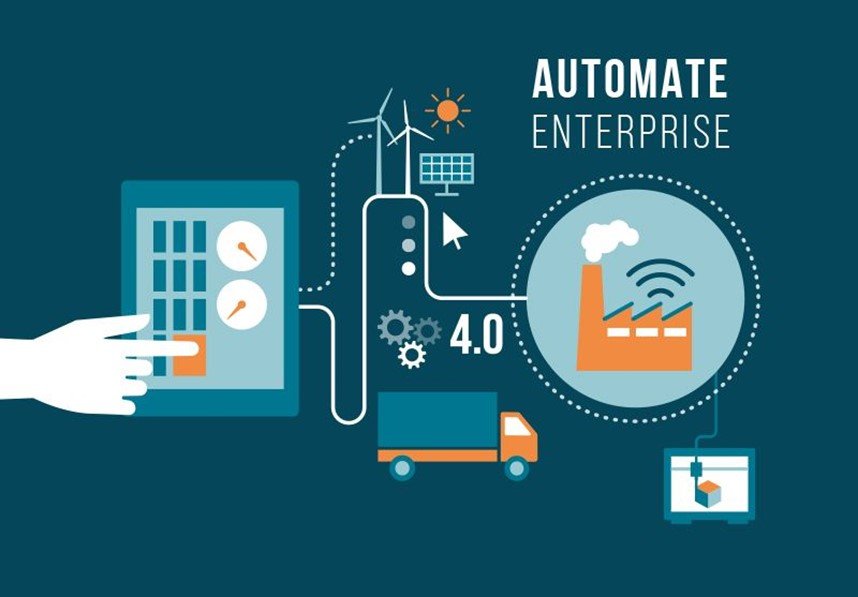
You can adapt to the changes, or risk being left behind. Automation can help; although, while most organizations have some automated processes in place, few have an automation strategy.
The biggest obstacle to effectively implementing automation is the lack of a holistic approach.
Automation implemented ad hoc leads to incompatibility and inefficiency.

So, How do you unify silos of automation? How do you align automation strategies between different departments and branches?

Without a central strategy, the benefits of automation cannot be fully realized. Automation, therefore, needs to be a critical component of your digital transformation and not just a means to deliver it.
Often, developers build out processes, produce the desired outcomes, and only when the processes are operational does the automation conversation occur (sometimes). Usually, however, teams get so busy running the processes that they never get around to the automation part. As a result, operationally they become difficult to maintain. The need for manual intervention increases, and so do error rates.
Someone once told me that to succeed in your job, you must get better faster than the job gets harder. Your automation must be able to evolve faster than the complexity it is designed to simplify. Adopting the Everything Strategy gives automation its proper role as a central catalyst for change and a driver of innovation.
So, what constitutes The Everything Strategy? There are five critical components (and, yes, all five are necessary):
- Simplify Everything – Continually examine and refine processes for areas where they can be simplified.
- Monitor Everything – Analyze and measure all aspects of the environment. Gain and retain immediate visibility of all processes (and their outcomes) and all physical, virtual, and cloud resources.
- Control and Automate Everything – With the rapid digitalization of business across just about every industry, IT is responsible for more than ever. Automation, uniquely, provides control, a necessary component of agility.
- Integrate Everything – Integrate across the entire landscape, end-to-end, from start to finish.
- Measure Everything – Improve insight with intelligent analytics and reporting designed to easily identify, monitor, and manage workflows and systems.
Picking the right IT Automation solution is critical to adopting an Everything Strategy. But equally as important, organizations need an Automation Advocate to spearhead design and development, promote the value of automation, and drive process improvement. Automation must be planned into every process, shifting its traditional role as postscript into one where it serves as prologue. Coupled, the right automation solution and the adoption of an automation-first mindset frees up people resources, allowing IT staff to focus more on digital business initiatives.
Enterprise Architecture & ERP Implementation Governance
Transitioning complex organizational workflows into scalable ERP modernization architectures requires systematic alignment between core operational processes and underlying digital infrastructure across all operating subsidiaries. When executing enterprise deployments within intricate multi-entity business environments, organizations must rigorously prioritize data normalization, chart-of-accounts standardization, and unified telemetry architectures. Establishing resilient, pre-configured integration boundaries across legacy application estates directly eliminates technical debt while ensuring end-to-end data integrity across high-frequency transactional lifecycles. Cross-functional governance committees—uniting financial controllers, supply chain leaders, and enterprise technical architects—remain indispensable for maintaining strict configuration discipline and curbing procedural fragmentation across regional operating units.
Beyond core transactional execution, enduring platform longevity depends on deliberate organizational enablement and continuous operational validation across all stakeholder tiers. Implementing isolated sandbox environments, automated regression testing frameworks, and formalized release cadence protocols enables business units to absorb continuous platform enhancements without introducing unexpected downtime or operational friction. Enterprises that deliberately pair proactive telemetry monitoring with targeted role-based training programs consistently achieve accelerated user adoption, compress post-go-live stabilization horizons, and maximize the long-term return on strategic technology investments. This disciplined operating model provides the institutional agility needed to scale operations predictably.





No comment yet, add your voice below!